
What were you doing when you were 15

January 30 marks World Neglected Tropical Diseases (NTD) Day, a global initiative to raise awareness about NTDs. This day serves as a vital opportunity to raise awareness about NTDs, a group of 20 diseases that disproportionately affect the poorest and most vulnerable populations. These diseases thrive in areas with limited healthcare, poor sanitation, and widespread poverty, leaving millions trapped in a vicious cycle of ill health and economic hardship.
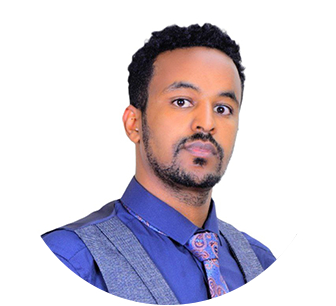
To understand more, I spoke with Dr. Mezgebu Silamsaw, a principal investigator at the Leishmaniasis Research and Treatment Center (LRCT) at the University of Gondar. According to Dr. Mezgebu “One of the most devastating NTDs is Visceral Leishmaniasis (VL), commonly known as Kala-azar.” As the second deadliest parasitic disease after malaria, Kala-azar is caused by parasites transmitted through the bites of infected sandflies. Its symptoms include persistent fever, severe weight loss, extreme anemia, and swelling of the spleen and liver. Without timely treatment, Kala-azar is nearly always fatal, with a mortality rate of over 95%. Every year, tens of thousands of lives are lost to this disease, making it a silent but deadly epidemic.
Eastern Africa is the epicenter of the global Kala-azar crisis, accounting for over 70% of reported cases worldwide. The region’s fragile conditions, including wars, famines, and mass displacement, exacerbate the spread of this disease. Although approximately 20,000 cases are reported annually, the real numbers could be significantly higher due to under-reporting and limited access to healthcare. In 2022, nearly half of those affected by Kala-azar in this region were children under the age of 15.
Ethiopia is one of the countries most severely impacted by Kala-azar, with the disease predominantly affecting lowland and border areas. For many Ethiopians, accessing treatment means traveling long distances, enduring painful injections, and facing prolonged hospital stays. Kala-azar is not just a medical condition here, it is a stark indicator of social and systemic neglect. The situation is further exacerbated by ongoing insecurity, particularly in the highly endemic areas in the Tigray and Amhara regions, which have been significantly affected by recent migrations from Sudan and the war in Tigray.

In Amhara region, Gondar and its surrounding areas are highly vulnerable to outbreaks of Kala-azar. Lowland regions near the Sudanese border, such as Humera, Metema and Abdurafi etc, are particularly hard-hit. These areas face severe challenges, including extreme poverty, widespread malnutrition, and limited healthcare access, creating favorable conditions for the disease to spread. The combination of cross-border movements and abundant sand-fly habitats leaves local populations at significant risk.
Kala-azar is particularly dangerous because it is often misdiagnosed, with early symptoms resembling those of common illnesses such as Malaria, Typhoid Fever, Tuberculosis and other tropical infections. These diseases share symptoms like fever, weight loss, fatigue, and abdominal pain, making it difficult to differentiate Kala-azar from other infections without proper diagnostic tests. “Patients often have to travel long distances—sometimes up to 200 kilometers—to access treatment, as there are only five or six hospitals in the region equipped to provide confirmatory diagnoses for Kala-azar. Many patients visit multiple health centers before receiving an accurate diagnosis, as Kala-azar is frequently overlooked. By the time they seek medical care, their condition has often worsened significantly, with severe complications such as kidney and liver damage, along with secondary infections, making the disease harder to treat and increasing the risk of mortality. To make matters worse, many patients initially rely on traditional medicine, believing their symptoms are caused by liver disease, locally referred to as wofe (ወፌ). These remedies not only fail to cure Kala-azar but can also worsen the condition.” Dr.Mezgebu explains.
When it comes to treatment, the current regimen involves two medications, Sodium Stibogluconate (SSG) and Paromomycin (PM), administered for 17 days. These drugs are highly toxic and can lead to severe side effects. Patients must stay in the hospital throughout this period due to the drugs' side effects. Regular laboratory tests are conducted to monitor for conditions such as anemia or other complications. Additionally, many Kala-azar patients are malnourished, requiring nutritional support alongside their treatment.
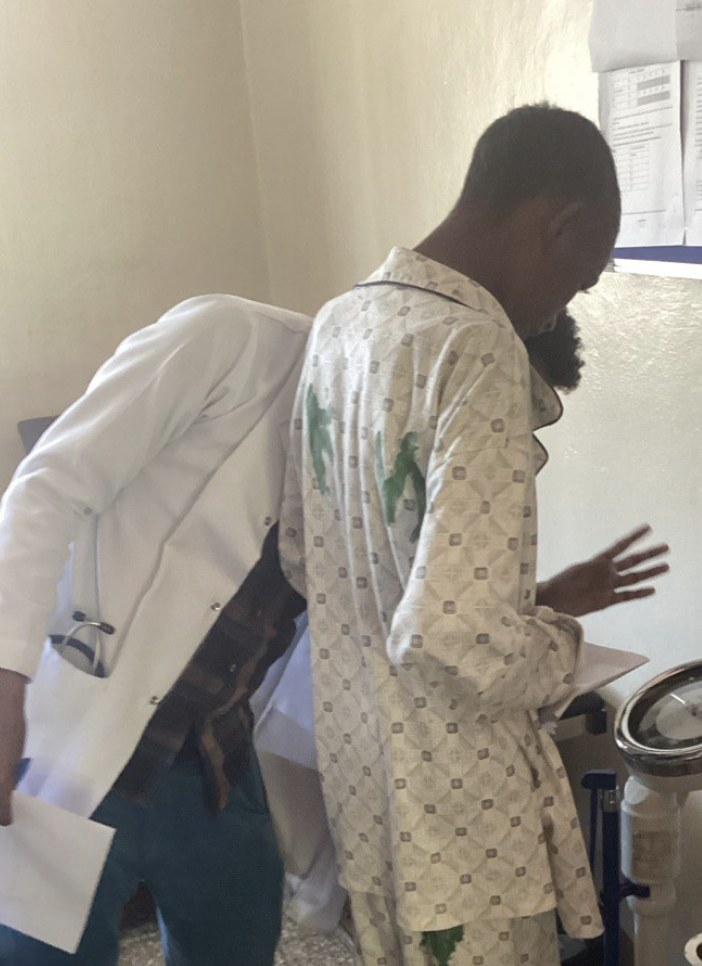
At the Leishmaniasis Research and Treatment Center (LRCT) at University of Gondar, I encountered a wide range of patients. Most of them were adults and older individuals. One young boy, however, stood out. Curious about his situation, I spoke with the doctors and nurses to learn more about him. They shared that he is here to seek treatment for Kala-azar and he was only 15 years old and entirely alone, with no family or attendant. Moved by his resilience, I decided to sit down with him. What he shared was heartbreaking, a vivid reminder of the human cost of this disease.
As the world celebrates NTD Day, I felt compelled to share his story to highlight why this day is so important and why we must continue to fight against diseases like Kala-azar.
He sat quietly on the edge of his bed. The youngest in the room, he wore an oversized hospital gown that hung loosely on his small, weary frame. Yet, his face remained bright, and his eyes held a quiet resilience. Though his body appeared fragile, his spirit radiated a mix of innocence and strength, reflecting the hardships he had endured.
We began to talk. I asked him his name, where he was from, how he was feeling, and how he came to be here.

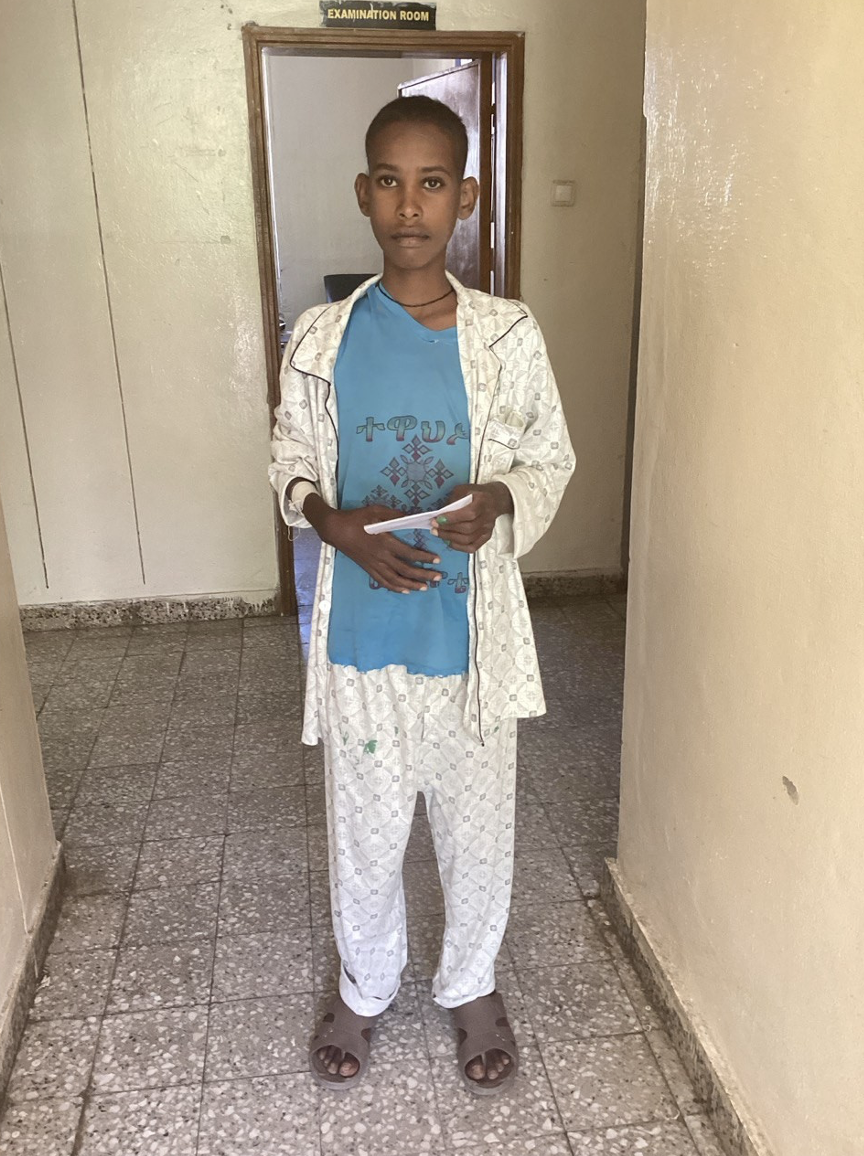
“My name is Abebaw Gedamu, and I’m almost sixteen,” he began, his voice soft but steady. He paused, looking down at his hands as if searching for the right words. “I used to live in Debark with my mom and dad.”
Out of curiosity, I asked, “Where are they now?” His voice was tinged with sadness as he replied, “They got divorced when I was about five years old.” He continued, “My dad became a bandit, and I don’t know where he is living now. And my mom, she’s married and has started a new life.”
His eyes glistened with tears as he went on. “After they got divorced, neither of them wanted to take care of me, so I went to live with my grandfather.” He looked up briefly. “I hadn’t even lost my baby teeth yet.” he recalls.
He continued living with his grandfather. While staying there, Abebaw split his days between school and work. Half of the day, he attended classes, and the other half, he worked to make ends meet. He cleaned shoes, washed Bajaj (three-wheeled vehicles), and took on daily labor jobs whenever he could find something within his strength. With his earnings, he not only supported himself but also occasionally helped his grandfather. “Life was full of hard work and struggle, but it was okay, at least.” Abebaw reflected.
However, life took a harsher turn when Abebaw was 11. His grandfather passed away, leaving him alone once again. This loss marked a turning point in his young life. Left with his step-grandmother, he tried to make the best of his situation, but things quickly became unbearable. “My step-grandmother started to abuse and mistreat me after he died,” Abebaw recounted. “She was very harsh. I couldn’t stay there anymore, so I left and went to live with my aunt.”
Abebaw felt at ease living with his aunt at first. Days turned into weeks, weeks into months, and soon, a year had passed. But over time, he began to notice that her husband wasn’t happy with him being there. “She had a nice home, and I was okay for a while, but her husband didn’t want me around. He got angry a lot, so, I had to leave,” Abebaw said, he was 13.
While other kids his age were enjoying life with their families, Abebaw’s life took a painful turn. Left to take care of himself, he had no choice but to leave his aunt’s house, he chose to face a tough, lonely life. He had to quit school and start working just to survive. “I was really good at school,” he said sadly. “I was one of the best students in my class. But with my situation it was impossible for me to attend school, I didn’t have anywhere to live or anyone to help me. I couldn’t keep going to school.” so he quit school.
Then he moved out and did the only thing he knew, finding ways to survive. He gave up on his dreams and focused only on getting through each day. It’s true what they say, you can’t dream when you’re just trying to survive. Luckily, he met someone from his hometown who was renting a house. The boy let him stay with him. For two years, he lived there, earning little money by cleaning shoes and washing cars. He managed to get by. But after two years, the boy had to leave for university, leaving him alone once again.
Feeling exhausted and overwhelmed, Abebaw decided to leave everything behind. He decided to make his way to Abrhajara, a small town known for its high prevalence of Kala-azar. Hoping for a fresh start, Abebaw arrived in Abrhajara, unaware of the challenges that awaited him. In a place like this, life was anything but easy.
“I went to Abrhajara because I needed a better-paying job,” he explained. There, he found work as a shepherd and farming, helping with weeding on the farm and earning five thousand birr per month. For the first time, he felt a glimmer of stability. He saved money and kept working there, sheltered in his employer’s house. But his newfound sense of security was short-lived.
This is when things took a turn for the worse. After working for five months, Abebaw began to feel something unfamiliar, a persistent sickness that wouldn't go away. Kala-azar, as Hindus call it the "Black Disease." His new dream, one he had hoped would bring a fresh start, turned dark. But this time, it wasn’t about money or shelter, it was about staying alive.
“At first, I had a really bad headache. My eyes turned yellow, and I was vomiting a lot,” he recalls. Traditional healers said he had liver disease. “They did things to my back and my arm,(he is saying that they cauterized him)” he says showing me his scars, wincing at the memory, “But my condition only got worse.”.
Desperate, he turned to clinics, where he was misdiagnosed repeatedly. Each diagnosis came with treatments that provided no relief, and he spent all his savings, earned from working as a laborer. He moved to different places looking for answers, but nothing changed. Everywhere he went, they gave him different diagnoses, one said Malaria, another said Yellow Fever, yet another said Anemia, while some people claimed it was Liver disease. His sickness remained undiagnosed, and he felt lost.
“I almost died,” Abebaw says, his voice heavy with the weight of his memories. For months, he endured debilitating symptoms, his body growing weaker with each passing day. “My feet started swelling, and they said it might be because of a snake breath or something I touched. They gave me medicine, but it didn’t help.” He told me that through all of this, he was alone, and that made me think, how could a 15-year-old boy go through all of this on his own?
It made me reflect on my own life at 15—what was I doing at that age? How could one innocent child endure such hardship? First, his parents divorced. Then, he endured abuse and mistreatment as he grew up. He watched his grandfather pass away, and on top of that, he had to fight for his survival, struggling through hard work and hustle, only to end up with kala-azar, one of the worst diseases out there. The disease itself is bad enough, but the treatment those toxic medications and painful injections only serve as a reminder of how terrible the illness is. I kept wondering how he must have felt, and I couldn’t help but feel sad.
What were you doing when you were 15? Were you even thinking about where you’d eat, or whether you were hungry? Did anyone abuse or mistreat you?
Moving on to the story, his older brother, who is stationed with the Ethiopian Defense Forces in Somalia, heard about his little brother’s situation. He tried searching for him and called their cousin, who lives in Abdurafi. She began searching for him and eventually found him in a bad state. She called her brother, who lives in Gondar, and sent Abebaw to Gondar to bring him to the hospital. After he was diagnosed, they told him his illness was Kala-azar. He was transferred to the Leishmaniasis Research and Treatment Center (LRCT) ward at the University of Gondar Hospital. Once he was admitted, the person who had brought him there left, and that’s when I found him.
Abebaw’s story is just one of many that highlight the harsh realities faced by individuals battling Kala-azar. For every person like Abebaw, there are countless others who struggle in silence, unaware of what is happening to their bodies or unable to access the care they so desperately need. Many are misdiagnosed, delaying crucial treatment until it is almost too late. Others rely on traditional remedies, which often worsen their condition instead of improving it. However, efforts are underway to change this narrative and improve the outlook for those affected by Kala-azar.
The Drugs for Neglected Diseases initiative (DNDi) has made significant strides in improving Kala-azar treatment. They have reduced the treatment duration from 30 days to 17, and more recently to 14 days with one injection and an oral medication. Currently, DNDi is conducting phase two clinical trials for LXE408, an oral-only treatment that could replace the current regimen.
Dr. Mezgebu and his team are working tirelessly on groundbreaking research, including the development of this promising oral medication. Unlike current treatments, which require painful injections and long hospital stays, this new treatment aims to be affordable, easy to take, and accessible even in the most remote areas. If successful, LXE408 would significantly lower side effects, improve efficacy, and be more accessible, eliminating the need for long travel distances and extended hospital stays. By making treatment easier and more affordable, it would greatly reduce the burden on patients and support WHO’s goal of eliminating Kala-azar by 2030. LXE408 is showing promising results in phase II trials and could transform Kala-azar treatment globally.
So it’s an important occasion to raise awareness about neglected tropical diseases (NTDs) that affect more than a billion people globally. This day serves to highlight the often-overlooked burden these diseases place on vulnerable populations, primarily in tropical and subtropical regions. NTDs like Kala-azar and other diseases disproportionately affect the poorest communities, leading to significant health and economic challenges.
World NTDs Day provides an opportunity to shed light on the progress being made in research, treatment, and prevention, while also encouraging continued global efforts to eliminate these diseases. It is a day for governments, organizations, and individuals to come together, recognize the impact of NTDs, and commit to further action in eradicating them.
So lets help create awareness by sharing posts and information on social media, encouraging people to join the fight against NTDs. Use hashtags like #WorldNTDDay, #EndTheNeglect, and #BeatNTDs to spread the message and inspire others to take action. Together, we can make a difference in the lives of those affected by these neglected diseases.
 Built with Shorthand